Science

Discovery Academy of Science

Science at Discovery Academy of Science

Curiosity. Investigation. Discovery.

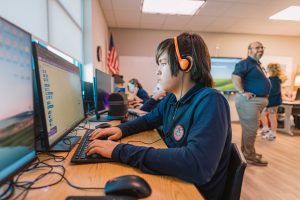
Science at Discovery Academy of Science is designed to help students understand the world by asking questions, investigating ideas, collecting evidence, and drawing conclusions.

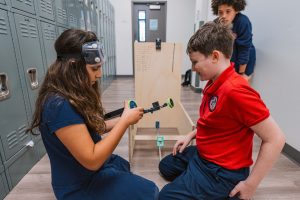
Our approach goes beyond memorizing facts. Students engage in hands-on experiments, inquiry-based learning, and real-world problem solving that encourages them to think critically, communicate clearly, and make meaningful connections across STEM+R subjects.

Our Approach to Science

Learning Through Questions and Exploration

At DAS, students are encouraged to approach science with curiosity.

Lessons are built around investigation, observation, experimentation, and discussion. Students learn to develop questions, test ideas, analyze results, and use evidence to explain what they discover.

Science instruction also connects naturally with technology, engineering, mathematics, reading, and writing, helping students see how different areas of learning work together.
What Defines Science at DAS

Hands-On Investigation

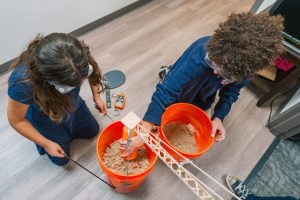
Students participate in labs, experiments, and activities that allow them to test ideas and observe scientific concepts in action.

Scientific Inquiry

Students learn to ask meaningful questions, gather evidence, analyze information, and develop conclusions.

Real-World Phenomena

Lessons connect scientific concepts to observable events and situations students encounter in the world around them.

STEM Integration

Science connects with technology, engineering, mathematics, and other subjects through interdisciplinary projects and challenges.

Scientific Literacy

Students build the vocabulary, reading, writing, and communication skills needed to understand and explain scientific ideas.

Collaboration & Discovery

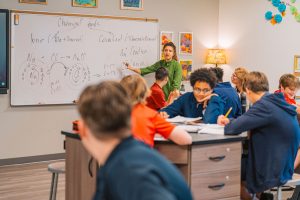
Students work together to investigate problems, compare ideas, and communicate their findings.

A Core Resource for Scientific Learning

Inspire Science

Inspire Science serves as a core science resource at DAS and supports hands-on experiments, inquiry-based instruction, and learning built around real-world phenomena. The program helps students move beyond simply reading about science by giving them opportunities to investigate concepts, gather evidence, make connections, and communicate what they have learned.

From Questions to Discovery

The Scientific Process in Action

Students learn science by doing science. Through guided investigations and hands-on activities, they develop habits of thinking that help them approach questions logically, evaluate evidence, and communicate their conclusions.

Ask
Investigate
Observe
Analyze
Explain
Discover

Science Beyond the Classroom

Opportunities to Go Further

Upper elementary and middle school students may have opportunities to extend their learning through science fairs, robotics, Science Olympiad, SeaPerch, FIRST LEGO League, and other STEM competitions as programs are available.

These experiences give students additional opportunities to apply classroom knowledge, work collaboratively, solve complex problems, and challenge themselves in competitive environments.

Advanced Science Pathways

Preparing for the Next Level

As students progress through the upper grades, they may have opportunities to participate in more rigorous laboratory science and accelerated coursework.

Depending on student readiness, campus scheduling, and program availability, pathways may include advanced study in areas such as Biology and Physical Science, helping prepare students for high-school-level coursework and future STEM opportunities.

Biology

Advanced Life Science

Physical Science

Foundations in Matter & Energy

Future Ready

Preparation for High School STEM

Building Scientific Thinkers

Science education at DAS is designed to develop more than content knowledge.

Students learn to:

  • ask thoughtful questions
  • investigate problems
  • analyze evidence
  • communicate ideas
  • collaborate with others
  • revise their thinking when new evidence appears

These skills support success in science while also strengthening the critical thinking and communication abilities students use across every subject.

See How Science Connects Across STEM+R

Explore how science works together with technology, engineering, mathematics, and reading through hands-on learning and real-world problem solving.